
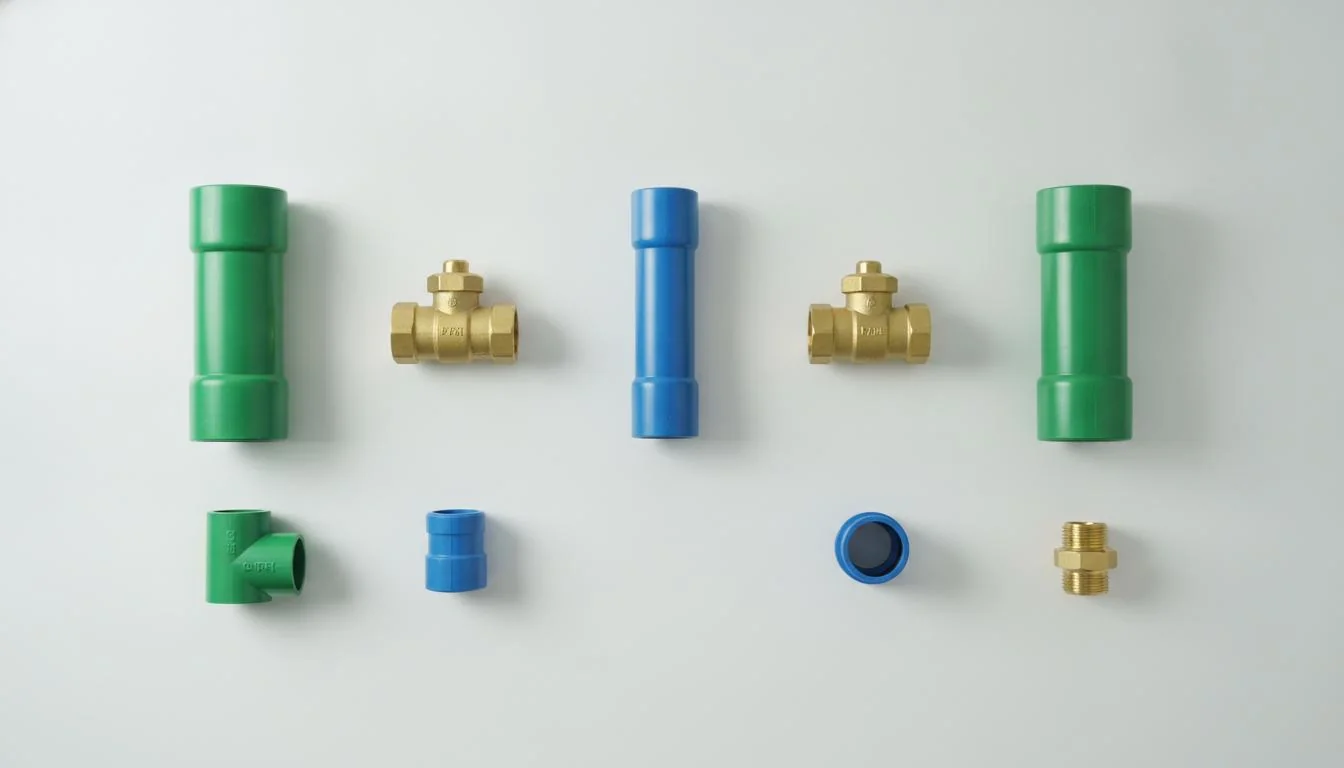
Introduction: Why Pipe Selection Matters in Industrial Systems
In residential plumbing, pipe selection is relatively straightforward — most systems operate at low pressures and ambient-to-hot water temperatures, and the available materials (PPR, CPVC, UPVC) are all suitable for standard water service.
Industrial systems are fundamentally different. A factory compressed air network at 10 bar, a pharmaceutical chemical transfer line carrying concentrated acid, or a chiller plant distribution circuit all present specific requirements that eliminate most materials and narrow the correct choice to one or two options.
Specifying the wrong pipe material in an industrial application doesn't just cause inconvenience — it can result in system failure, production downtime, and in pressure systems, safety incidents. This guide provides a systematic approach to industrial pipe selection.
Step 1: Define Your Operating Parameters
Before selecting any pipe material, establish these five parameters:
1. Maximum operating pressure (bar or MPa)
2. Maximum operating temperature (°C)
3. Fluid type (water, compressed air, chemical, slurry, etc.)
4. Chemical content of the fluid (is it corrosive, acidic, alkaline, or a solvent?)
5. Indoor/outdoor and UV exposure
These five factors will guide every material decision in the selection process.
Step 2: Pressure Rating — The Safety Critical Factor
Pressure rating is the most critical specification in industrial pipe selection. Using a pipe rated below your system operating pressure is a direct safety risk.
Understanding Pressure Ratings
Pipe pressure ratings are stated as working pressure at a specific temperature. As temperature increases, the pressure rating of thermoplastic pipes decreases. This is an important nuance that is sometimes overlooked.
For polypropylene pipes:
- PPR at 20°C: Rated to PN16 (1.6 MPa) — suitable for cold water service
- PPR at 60°C: Rated to PN10 (1.0 MPa)
- PPR at 95°C: Rated to PN6 (0.6 MPa) — hot water service at reduced pressure
- PPCH: Rated to 16 bar — designed for high-pressure applications including compressed air
Practical Rule: Always Select Above Your Maximum Operating Pressure
For compressed air systems, the design rule is to select pipework rated to the maximum compressor outlet pressure, not the normal operating pressure. If your compressor has a maximum output of 12 bar, specify PPCH (rated to 16 bar) — not PPR, which would be inadequate.
Step 3: Chemical Resistance — The Material Compatibility Question
The fluid composition is the second key selection factor. Polypropylene-based pipes (PPR, PPRC, PPCH) offer good general chemical resistance, but the specific chemical content of your process fluid must be assessed against the material's compatibility data.
PPR: Good for neutral fluids and mild service
Standard PPR is suitable for potable water, hot water, neutral process water, mild detergent solutions, and similar near-neutral fluids. It is not recommended for use with concentrated acids, strong bases, aromatic hydrocarbons, or chlorinated solvents.
PPRC: Enhanced chemical resistance for industrial chemicals
PPRC (Polypropylene Random Copolymer — Chemical grade) is specifically formulated for use with a broader range of industrial chemicals. It is suitable for:
- Most dilute and concentrated inorganic acids (hydrochloric, sulphuric, phosphoric, nitric at moderate concentrations)
- Most alkalis (sodium hydroxide, potassium hydroxide)
- Salt solutions and brine
- Many organic compounds
For pharmaceutical and chemical processing facilities, PPRC is the standard specification for chemical transfer and dosing lines.
PPCH: Pressure-optimised, similar chemical resistance to PPR
PPCH's chemical resistance profile is broadly similar to standard PPR. Its advantage over PPR is in mechanical pressure capability, not chemical resistance. For applications requiring both high pressure and aggressive chemical resistance, consult a specialist.
When to Use PPRC Instead of PPR
If your process fluid contains any of the following, use PPRC rather than standard PPR:
- Acid concentrations above trace levels
- Alkali concentrations above trace levels
- Industrial cleaning agents (at process concentrations)
- Chlorinated compounds
- Any chemical that would dissolve or attack polypropylene
Step 4: A Brief Comparison — PPR, PPRC, PPCH vs PVC
PVC (Polyvinyl Chloride) is one of the most commonly used plastic pipe materials worldwide. It is low-cost, widely available, and suitable for cold water service. However, it has significant limitations in industrial applications:
| Property | PPR/PPRC/PPCH | PVC/UPVC |
|---|---|---|
| Maximum temperature | PPR/PPRC: 95°C | ~60°C max |
| Pressure at high temp | PPR: PN6 at 95°C | Drops significantly above 40°C |
| Hot water service | Yes (PPR/PPRC) | Not recommended |
| Joining method | Heat fusion — permanent | Solvent cement — relies on adhesive |
| Chemical resistance | PPRC: broad | Limited (swells in some solvents) |
| Cold brittleness | More ductile | Brittle below 0°C |
| High-pressure compressed air | PPCH: 16 bar | Not rated for compressed air |
The key practical differences:
- PVC cannot be used for hot water service. PPR handles up to 95°C.
- PVC joints use solvent cement, which can weaken over time and in chemical environments. Heat fusion joints are permanent and as strong as the pipe.
- PVC is not rated for compressed air systems. PPCH is the correct choice.
- PPRC offers superior chemical resistance to PVC for most industrial chemical applications.
For industrial applications — especially hot water, compressed air, and chemical service — PPR, PPRC, or PPCH will outperform PVC in both technical capability and long-term service life.
Step 5: Temperature Conditions — Indoor vs Outdoor
UV exposure degrades polypropylene over time. For outdoor installations:
- Underground burial: All PPR/PPRC/PPCH pipes are suitable without additional protection.
- Above-ground outdoor: Use UV-protective insulation, cladding, or paint to protect the pipe from direct sunlight.
- Cold environments: Polypropylene maintains good ductility at low temperatures, but protect from freeze conditions as with any water-carrying pipe.
Quick Selection Reference
| Application | Recommended Material |
|---|---|
| Hot water supply (up to 95°C) | PPR |
| Cold water supply | PPR |
| Compressed air (up to 16 bar) | PPCH |
| Chemical transfer / pharma process lines | PPRC |
| Cooling tower water circuits | PPR or PPCH (depending on pressure) |
| High-pressure process water | PPCH |
| Industrial chiller circuit mains | PPCH |
| FRP lining for existing corroded pipes | FRP lining service |
Conclusion
Industrial pipe selection comes down to three questions: How much pressure? What temperature? What chemical environment? Answering these three questions systematically leads you directly to the correct material.
For compressed air: PPCH (up to 16 bar). For hot water: PPR (up to 95°C). For chemical service: PPRC. For rehabilitation of existing corroded chiller pipes: FRP lining.
Talk to Our Team for Expert Pipe Selection Advice
LBow Network Solutions has 8+ years of experience helping Bangalore's industrial sector specify, procure, and install the right piping systems. We supply PPR, PPRC, PPCH, and Prince Pipes branded products with no minimum order quantity. Free demo available — call +91 8123501407 to schedule.
Call us at +91 8123501407 or WhatsApp us with your system parameters and we will recommend the right pipe for your application.